Whale season on the Surf Coast
Every winter the whales come along Victoria's coast. Southern right whales travel up from their feeding grounds in the Southern Ocean to have their calves and raise them in sheltered water close to shore. Humpbacks go past on their long migrations. The Victorian Government says whales are in Victorian waters from May to October, when mothers and calves are close to the coast.
The Surf Coast isn't Victoria's most famous whale-watching spot. That's Logans Beach at Warrnambool, further west. But whales get reported along this stretch regularly, including around Torquay. You won't see them every day. Take binoculars on a clifftop walk on a calm winter morning, though, and you're in with a real chance. If they don't show, you've still done one of the best coastal walks in the state.
Holyday House works well for it. It's a 400m walk from Whites Beach and a few minutes' drive from the lookouts at Point Danger and Bells. It's set up for winter, too, with wood fires, split-system heating and a private hot tub for thawing out after a cold morning on the cliffs.
Which whales you might see
Southern right whales
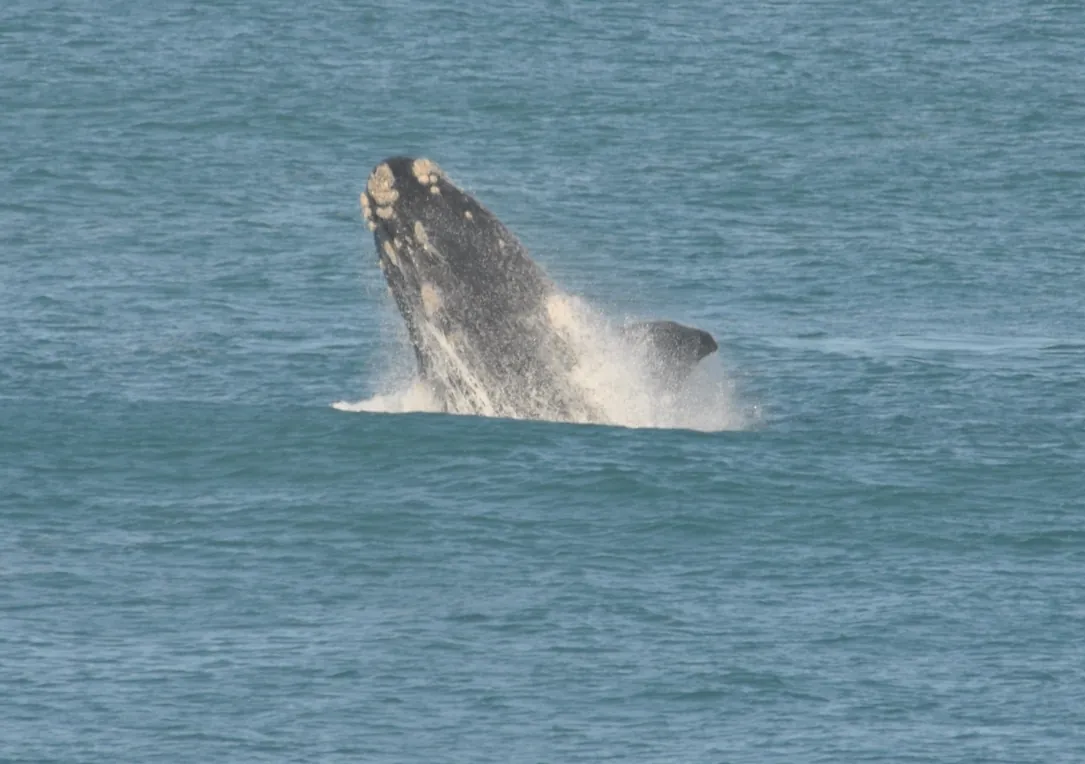
This is the whale Victoria's coast is known for. Southern rights are big and slow and often stay close to shore, so they're your best bet from land. They've got no dorsal fin, which makes them hard to pick out. Resting near the surface, one can look like a floating log. Look for the V-shaped blow and the pale, rough patches (callosities) on the head. Mothers with calves sometimes hang about in one spot for days. They're a threatened species, and that's why the approach rules below matter.
Humpback whales
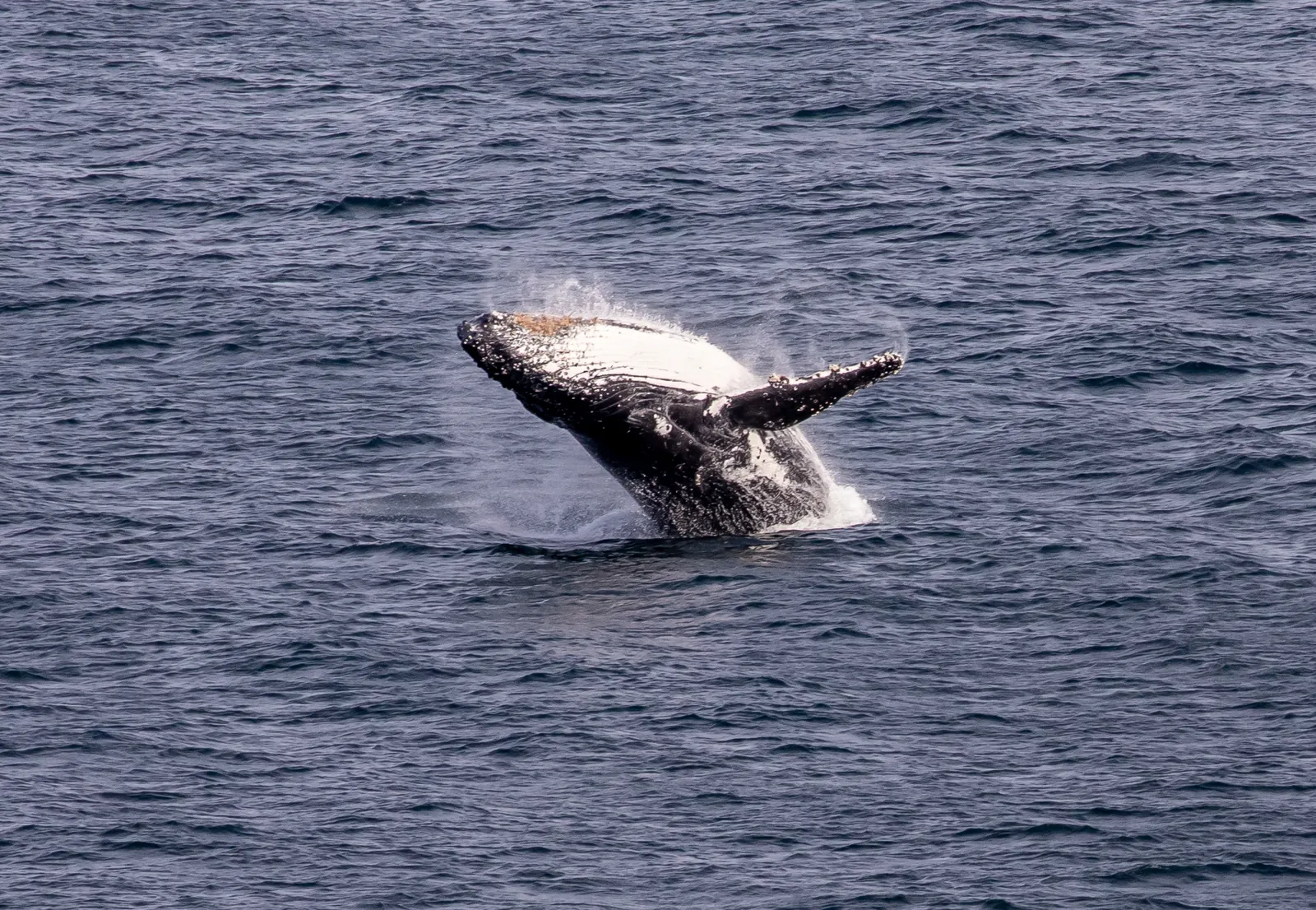
Humpbacks go along the Victorian coast on their migrations, and they're the show-offs. Breaching, slapping their tails, waving those long pectoral fins about. They're usually further out than southern rights, so binoculars help.
Occasional visitors
Orcas and blue whales get reported along Victoria's west coast now and then, but sightings are rare. Dolphins and seals are far more common, and they often turn up while you're looking for whales.
When to look
The season runs roughly May to October. Sources don't agree on the peak, but June to September is the most reliable stretch, and numbers change a lot from year to year. Sometimes the first sightings come in late May.
The weather matters as much as the month. Whales are much easier to spot on calm days, when a blow or a splash shows up on flat water. Strong wind and whitecaps make it really hard. Morning light helps too, with the sun behind you as you look out to sea. Our best time to visit Torquay guide says what winter on the coast is like.
Where to watch, heading west from Torquay
Get up high. You'll see much further from a headland or clifftop than from the sand. Here are the lookouts within reach of Holyday House, closest first.
Point Danger, Torquay (about 5 min)
The headland between Torquay's front and back beaches, looking out over Bass Strait. It's the easiest one to check on the way to coffee, and a good first stop any morning.
Rocky Point and the Jan Juc clifftops (5–10 min)
The Surf Coast Walk climbs up onto the clifftops between Torquay and Jan Juc and goes past the Rocky Point lookout. Visit Great Ocean Road says you can see whales anywhere along this coast in season. Being up high here gives you a wide view between May and October. You can walk it there and back from Point Danger.
Bells Beach (about 10 min)
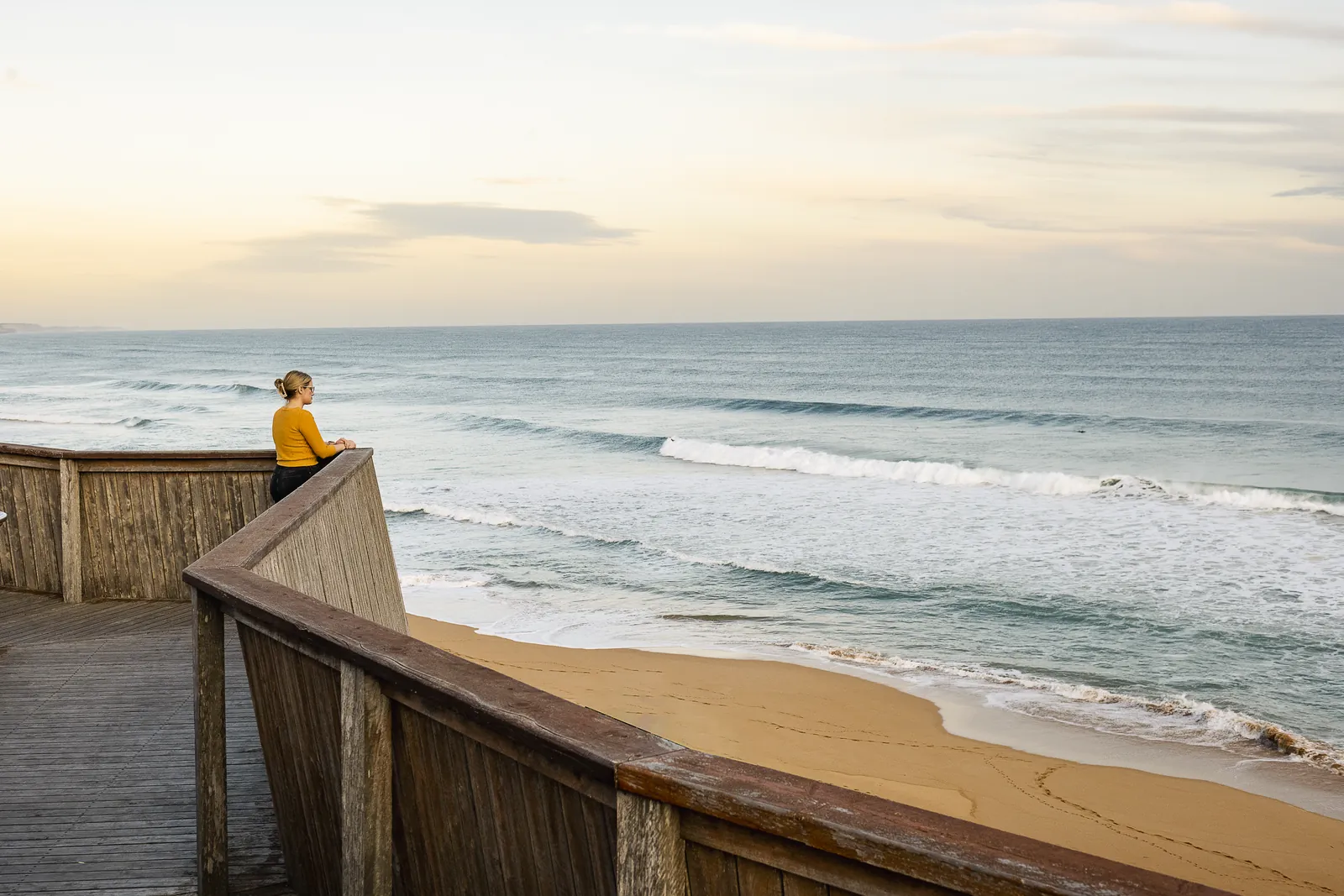
The clifftop viewing platform above Bells looks a long way down the coast. While you're there, watch the winter swell on the reef.
Point Addis (about 15 min)
A big, dramatic headland in the Great Otway National Park, with lookouts high above the water. It's one of the best spots on the Surf Coast for watching from land. Dogs aren't allowed in the national park.
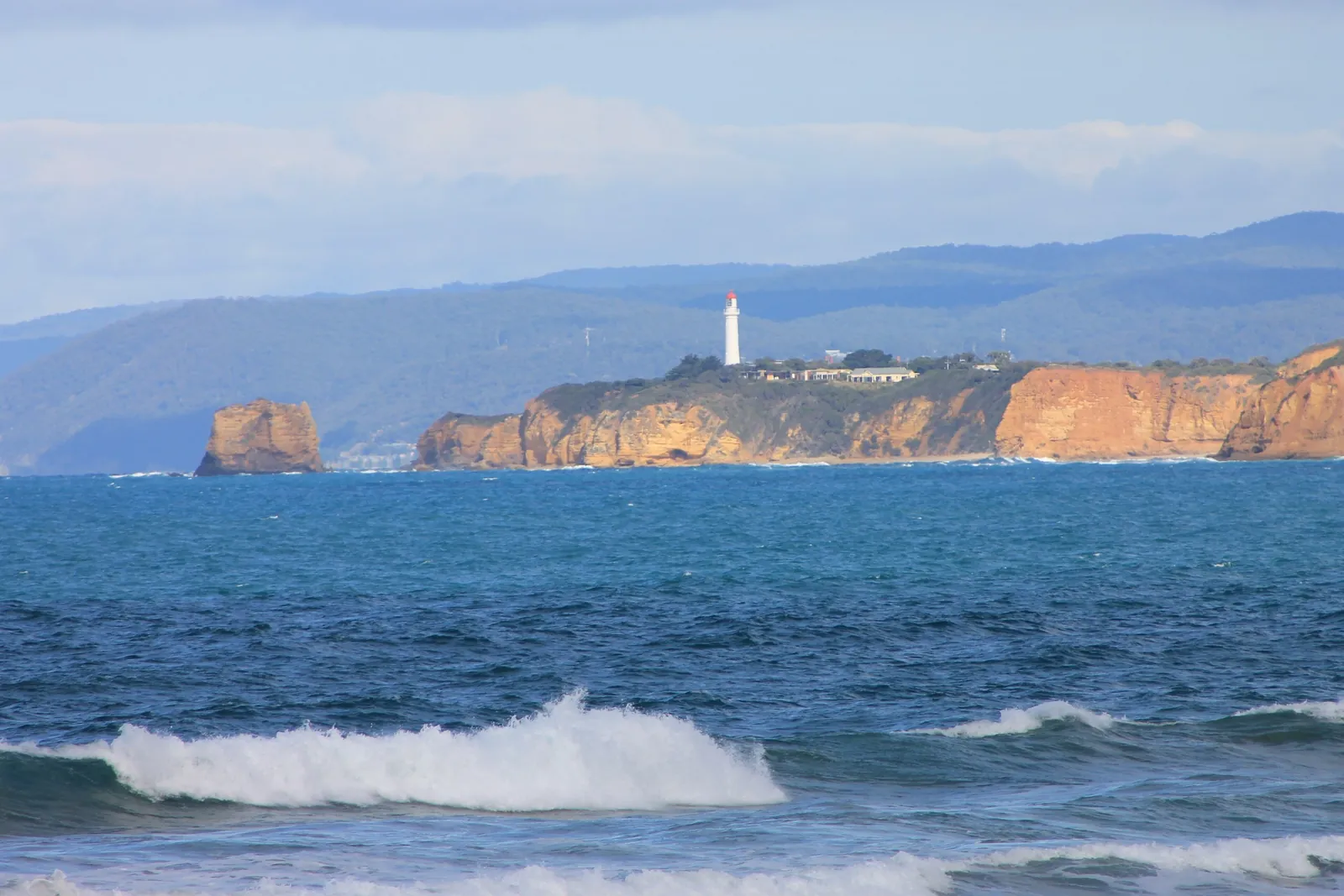
Split Point Lighthouse, Aireys Inlet (about 30–35 min)
The lookout next to the lighthouse is a well-known spot for southern rights and humpbacks between May and October. The Lighthouse Discovery Trail nearby goes past more lookouts on the way to Fairhaven.
Lorne (about 45 min)
Now and then whales get seen from the beach and foreshore at Lorne, but higher lookouts give you better odds. It's an easy day out, with lunch thrown in. Our Great Ocean Road guide has more.
The Surf Coast Walk joins up most of these lookouts. It starts at the eastern end of Whites Beach, so you can walk out the front door and along the coast with the binoculars, checking the water as you go.
Further afield: Cape Otway and Warrnambool
Cape Otway Lightstation is up on high cliffs at the tip of the Otways, and Visit Great Ocean Road recommends it for southern rights and other migrating species. It's more than two hours' drive each way, so save it for a full Great Ocean Road day.
Logans Beach, Warrnambool is Victoria's best-known southern right whale nursery. Warrnambool City Council says that almost every year between June and September, female southern rights come back there to calve, and they often come within a hundred metres or so of the shore. There's a free viewing platform in the dunes that's open at all times. Warrnambool is around three hours' drive from Torquay, so it's a long day. Sightings aren't guaranteed. Ring the Warrnambool Visitor Information Centre before you set off and ask if the whales are in.
Keeping your distance
Victoria has minimum approach distances for whales. Here's what the Victorian Government's 2026 guidance says:
| Who | Minimum distance from whales |
|---|---|
| Swimmers and surfers | 50 m |
| Boats | 200 m |
| Jet skis | 300 m |
| Drones and other aircraft | 500 m |
Boats also have to slow to 5 knots within 300m of a whale and should stay under 10 knots within 1km. The distance rules cover surfers too. If a whale comes up near the line-up, paddle away and give it room. Breaking the rules can cost you more than $4,000. Check the current rules on the Victorian Government's website before you head out on the water.
Reporting a sighting
- Share your sighting. The state's WhaleFace project collects southern right whale sightings and photos to identify individual whales. Head shots are the most useful, because every whale's callosity pattern is different.
- A whale or dolphin in distress. If it's stranded, tangled up or injured, call the DEECA Whale and Dolphin Emergency Hotline on 1300 136 017. Don't go near it yourself.
- People or boats too close. Report breaches of the approach distances to Crime Stoppers Victoria on 1800 333 000.
Tips for a good whale day
- Bring binoculars. They make the biggest difference, especially for humpbacks further out.
- Pick a calm day. Check the wind forecast and go when it's light.
- Scan slowly. Look for a puff of spray, a dark shape that doesn't move like a wave, or birds and dolphins bunching up.
- Dress for the cliffs. Winter wind on an exposed headland is cold. Really cold. Take a warm layer, a beanie and a thermos of something hot.
- Ask around. Locals, visitor centres and community groups often pass on recent sightings.
Then head home. After a morning on the clifftops, the wood fires, the hot tub and a long lunch are the other half of a Surf Coast winter.
Whale Watching FAQ
When is whale season near Torquay?
Whales are in Victorian waters from about May to October, and June to September is usually the best time. Numbers change from year to year.
Can you see whales from Torquay?
Yes, sometimes. Whales get reported along the Surf Coast every winter, including around Torquay. The closest lookouts are Point Danger and the clifftops towards Jan Juc and Bells. Sightings aren't guaranteed.
What's the best place to see whales on the Great Ocean Road?
Logans Beach in Warrnambool is the most reliable. It's a southern right whale nursery from roughly June to September. Closer to Torquay, try Point Addis and the Split Point Lighthouse at Aireys Inlet.
How close can I get to a whale?
In Victoria, swimmers and surfers must stay at least 50m away, boats 200m, jet skis 300m and drones 500m. Check the Victorian Government's current rules before you head out on the water.
Who do I call about a stranded or entangled whale?
The DEECA Whale and Dolphin Emergency Hotline on 1300 136 017.
Is winter a good time to stay in Torquay?
If you like quiet beaches, big swells and cosy nights in, yes. Holyday House has wood fires, split-system heating and a private hot tub. Have a look at our spa getaway guide.
Thinking about a winter trip to the Surf Coast? Check dates at Holyday House. For more winter ideas, try things to do in Torquay.
Sources
Facts on this page were checked against these sources on 13 October 2026. Opening hours, patrols, rules and closures change — check with the source before you go.
- Whale season ahead: boat with care — Victorian Government
- Whale and dolphin emergencies — Wildlife Victoria (Victorian Government)
- Whale watching in Victoria — Visit Great Ocean Road
- Whale watching — Warrnambool City Council
- Split Point Lighthouse — Visit Great Ocean Road